
Abstract
Mercy Dogs also known as ambulance dogs, Red Cross dogs, casualty dogs and Sanitätshunde by the Germans, were dogs that served in a paramedical role and played a crucial role in both World Wars. Most notably during World War I, providing critical aid and comfort on the trench battlefields of the Western Front. Trained to locate wounded soldiers, carry medical supplies, and guide medical officers "medics" to those in need, they were true unsung heroes.
Introduction
The first mercy dogs were trained by the German army in the late 19th century. A program to train mercy dogs in 1895 begun by Jean Bungartz in Germany, who founded the "Deutscher Verein für Santiätshunde" or German Association for Medical Dogs. His initiative was described as a "novel experiment".
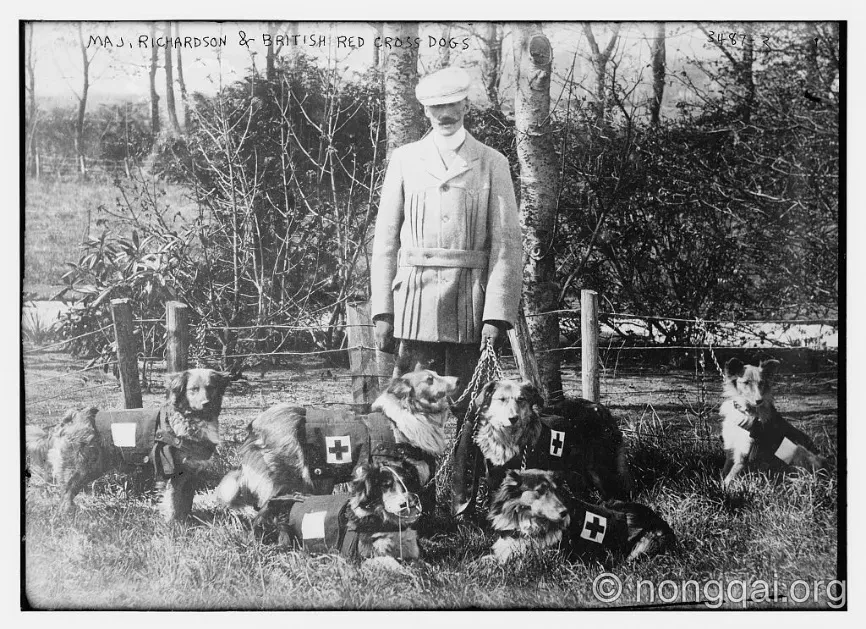
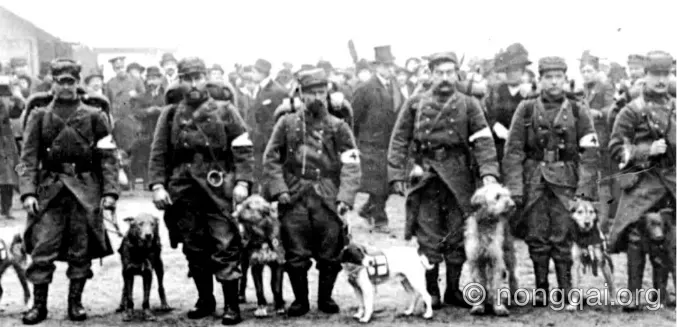
Five years later (1900), Britain took notice after Major Edwin Richardson observed that English-bred dogs were being shipped to Germany in bulk. “I took notice of a ‘foreigner’ buying a sheepdog (Border Collies) from a shepherd and learned that the man was a German, sent over by his government to purchase large quantities of collie dogs for the German Army, Richardson recounted”. Seeing a similar need, Richardson and his wife opened the British War Dog School, just prior to the outbreak of war in 1914 — the first of its kind in the nation. While Richardson trained several different breeds, his favourite was Airedales for their intelligence, devotion and coolness under fire. By 1908 Germany, Italy, Austria, England and France had programs training mercy dogs.
Major Edwin H Richarfson with Red Cross mercy dogs During WW I: https://en.wikipedia.org/wiki/Mercy_dog
World War l: 1914 - 1918
Their popularity continued to grow during WWI, and they were used by most European armies, including British Allied Forces. They tended to be trained by national Red Cross Societies to serve the country in which the specific society operated. The sophistication of their training was astounding. They were taught to ignore dead bodies and enemy soldiers and could understand a huge range of hand signals. In addition to this, each dog was trained to freeze or bury itself if it encountered hostile fire. German Shepherds and Boxers were commonly used as mercy dogs owing to their intelligence and enduring loyalty.
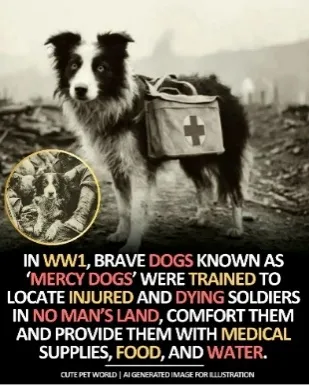
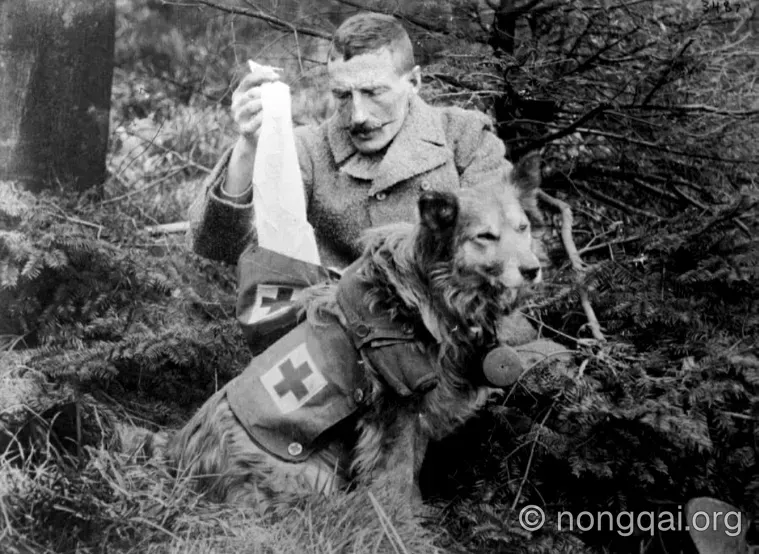
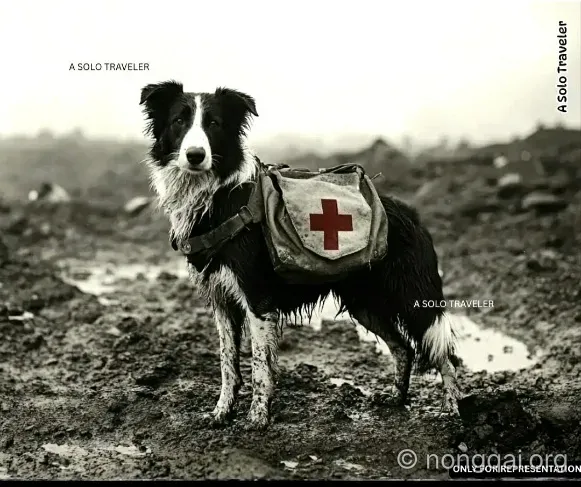
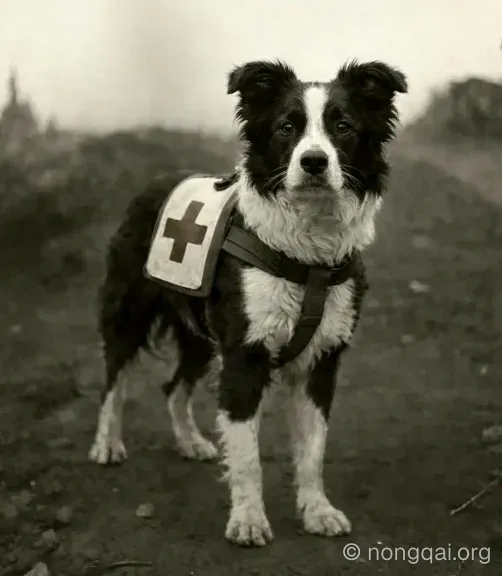
Following large battles, mercy dogs were sent out to assist the wounded. Their heightened sense of smell meant that they were perfect for sniffing out wounded soldiers in thickets, bushes, ditches and mud who otherwise might have been missed. They wore a vest with the Red Cross symbol and carried a saddle bag with first aid supplies, water and liquor that could be used by injured soldiers. Those who could walk would then be led back to the safety of their trenches by the dog. There are also many stories of mercy dogs dragging soldiers back to safety or out of the way of enemy fire. These animals were also trained to guide combat medics to soldiers who required more extensive medical care. The dogs would return to their handlers carrying a cap, glove, or torn scrap of clothing as evidence that they had located a wounded soldier before leading a stretcher party straight back to the victim.
Beyond providing medical assistance, mercy dogs were also trained to remain with mortally wounded soldiers, offering them comfort and ensuring that they were not alone when they passed. The steady and warm presence of these amazing animals would surely have eased the fear and pain of countless soldiers whose final breaths were taken in no man's land.
As many as 10,000 dogs are known to have served as mercy dogs during WWI, and they are credited with saving thousands of lives, including at least 2,000 in France and 4,000 wounded German soldiers. These dogs became national heroes, highlighting that everyone could do their bit to support the war effort, even our furry friends. Mercy dogs served their nations with commitment, loyalty, bravery, and valour in a way that only dogs could, with many killed while working to save the wounded.
For wounded soldiers in No Man’s Land during World War I, few things could bring more comfort than the gentle nudge of a wet nose. The arrival of a mercy dog meant help was coming.
Instead of barking and alerting the enemy, the dogs were trained to bring back something belonging to the soldier, ”according to the Red Cross”.
In WW I, Mercy Dogs were trained to locate and comfort mortally wounded soldiers as they died in No man's land. They were outfitted with saddlebags that had water, liquor and first aid supplies to help the wounded soldiers.
World War ll
A more noble and humanitarian task that was common during World War I was the use of first-aid or Medical Corps dogs. Russian medical dogs of World War I were trained to drag wounded men to safety. This mission was continued mainly in the European Theatre during World War II, most notably in the casualty-heavy fighting on the Eastern Front. In the lead-up to World War II, it was reported that the German Army was conscripting dogs to serve as messengers, watch dogs, and mercy dogs.
During World War II, mercy dogs became indispensable partners on the battlefield, performing life-saving work under conditions that tested even the most seasoned soldiers. These highly trained animals were taught to navigate the smoke, debris, and chaos of combat zones in search of wounded men who could not reach medical aid on their own. Each dog carried a medical pouch stocked with essentials such as bandages, water, and morphine, allowing conscious soldiers to treat themselves long enough to survive until help arrived. When a dog found someone too injured to move or unconscious, it would often tug at the man’s clothing to check for signs of life and then race back to its handler to signal that a medic was urgently needed.
Germany, Britain, France, and the Soviet Union all used mercy dogs widely, relying heavily on intelligent, strong, and trainable breeds like German Shepherds, Dobermans, and Collies. The German Army alone deployed more than 200,000 military dogs—thousands of them trained specifically for Red Cross work—while Britain developed a formal training program at the War Dog School founded by Major (later Lt. Col.) Edwin Richardson, whose wife, Blanche Richardson, had already proven the value of these dogs during World War I. Their combined work helped transform mercy dogs from experimental helpers into essential components of wartime medical response. The United States Army Medical Corps used ambulances with setter dogs, to find wounded soldiers on the battlefield. Its training program began in August 1942.
Key Roles and Training of the Mercy Dogs
Locating the Wounded
Using their superior scent and hearing, these dogs found soldiers who were unconscious or hidden in thickets, craters, or rubble where humans might miss them
Medical Delivery
They wore specialized saddlebags containing first-aid supplies, water, and sometimes rations or stimulants (like brandy) so conscious soldiers could treat themselves
Triage and Signalling
Dogs were trained to ignore the dead and signal for the living. If a soldier was too injured to move, the dog would return to its handler with a piece of the soldier’s uniform or a specific "bringsel" (a strap on the collar) to lead medics back to the site
Emotional Comfort:
For mortally wounded soldiers, these dogs would often lie down beside them, providing warmth and companionship so they did not have to die alone.
Notable Breeds and National Programs
Intelligent and resilient dogs Preferred Breeds:
German Shepherds, Collies, Doberman Pinschers, Setters and Airedale Terriers were the most common due to their intelligence and resilience.
Key Examples:
While many were unsung, a German Shepherd named "Rip" became a famous search-and-rescue dog in London during the Blitz, locating over 100 people trapped in rubble.
Usage
Germany:
The German Army(Sanitätshunde) had a massive program, utilizing thousands of “Red Cross Dogs" alongside their other 200,000 war canines.
Soviet Union:
Soviet dogs were extensively used on the Eastern Front, where they were even trained to drag wounded soldiers to safety on sleds or carts through deep snow.
Britain:
In addition to battlefield roles, dog like Rip became legendary for finding survivors buried under rubble during the London Blitz
United States:
While the U.S. focused more on sentry and scout roles, they established and official War Dog Program in 1942 that included casualty-location training, primarily using Pointers and Setters.
The training of Mercy Dogs were pretty innovative for their time. Their training involved: • Obedience and agility training • Learning to navigate trenches and battlefield terrain • Identifying wounded soldiers via scent • Fetching medical supplies or guiding medics
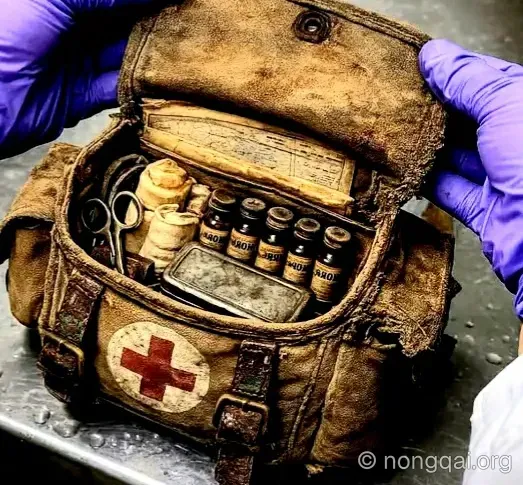
The equipment the Mercy Dog carried in his saddlebag or panny contained the following equipment:
• First Aid Supplies: Bandages, gauze, antiseptic, and medical kits
• Water: Small canteens or bottles of water to hydrate wounded soldiers
• Liquor/Stimulants: Brandy, whiskey, or other liquor, used to offer a small dose to help with shock or pain, often referred to in accounts as "stimulants"
• Rations/Food: Small food rations or biscuits
• Communication Notes: Sometimes, small notebooks or notes to assist with communicating the soldier's condition back to handlers. Sometimes even maps of the specific area of the front.
Famous Examples
Rip
A stray German Shepherd mix in London who became an unlikely hero on the home front. Discovered as a stray after a bombing raid in London during the Blitz, Rip had no formal training, yet he quickly learned to scramble over shattered buildings and sift through debris to locate people trapped beneath rubble. His instincts and determination saved more than 100 lives, earning him the Dickin Medal—the animal equivalent of the Victoria Cross—and cementing his place in wartime legend.
Bobby
Bobby, a Soviet dog credited with saving dozens of lives on the Eastern Front including during the Battle of Stalingrad. On the Eastern Front, Soviet dogs carried out similar missions, braving brutal winters, relentless artillery fire, and treacherous terrain to find wounded soldiers who might otherwise have been lost in the snow.
Prusco
Prusco, a French WWI “mercy dog” — trained to cross No Man’s Land alone, where no human could safely go. Through gunfire, explosions, and poison gas, he searched for wounded soldiers left behind. What he did next saved over 100 lives… by simply dragging them out and changed battlefield rescue forever
Captain
A dog named Captain rescued 30 men in a single day
Sergeant Stubby
Although primarily a WWI hero, his legacy of locating wounded soldiers set the standard for American "Mercy Dog" expectations in later conflicts. Sergeant Stubby (1917 - 1926) was the most decorated war dog of WW I and the only fog promoted to Sergeant by combat. A stray Boston - Terrier mix adopted by the 102nd Infantry, 26th Division, he served 18 months on the Western Front and took part in 17 battles. Stubby warned troops of gas attacks, located wounded soldiers, and once captured a German spy. After the war he became a national hero and met three US Presidents Unlike ambulances medical officers (medics), dogs could traverse treacherous terrain using their superior scent and hearing to find soldiers hidden from view. If a soldier was conscious, they could use the bandages or water the dog brought. If incapacitated, the dog would return to the handler with a piece of the soldier's equipment (like a hat or belt) to guide them to the scene.
Whether navigating bombed-out cities or frozen battlefields, mercy dogs demonstrated extraordinary courage and devotion, providing hope in moments when survival seemed impossible. Their sacrifices and achievements remain a powerful reminder of the profound bond between humans and animals in the darkest chapters of history.
Swiss Alps
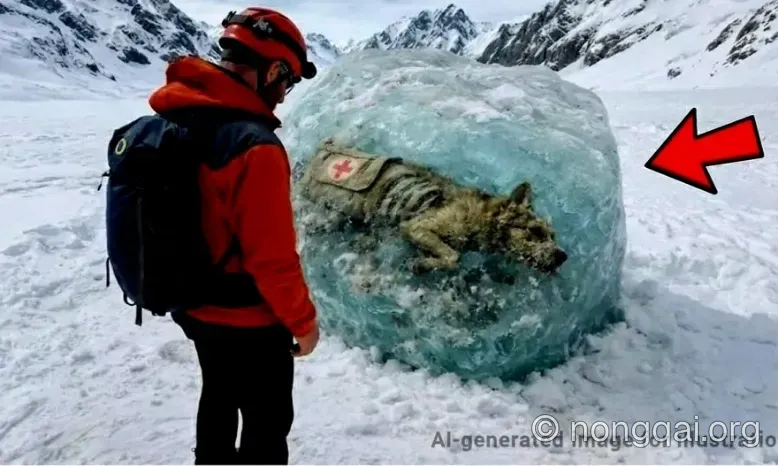
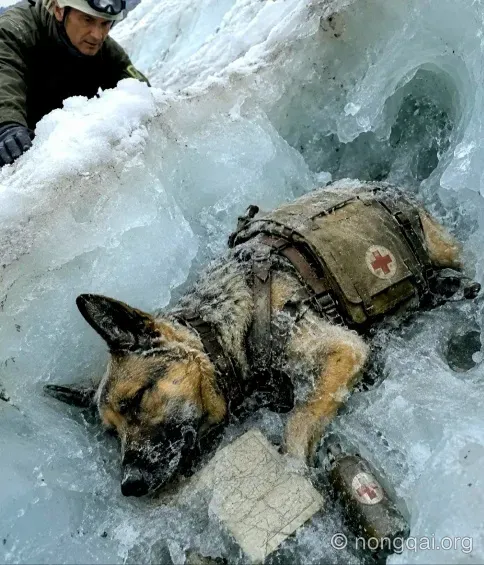
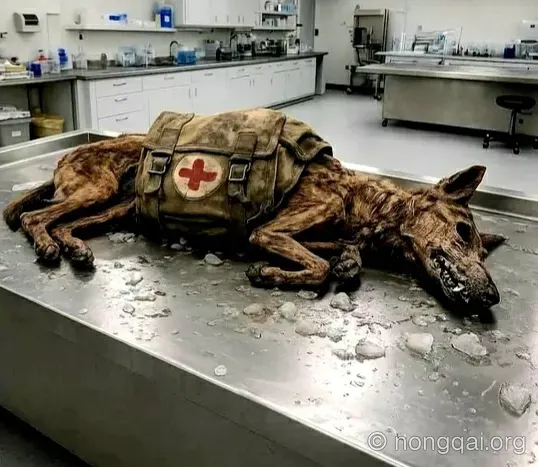
High in the Swiss Alps, climbers were busy climbing expecting to find nothing beneath the centuries-old ice… until the haunting sight, the outline of a frozen German Shepherd dog slowly emerged.
The glacier had been retreating for years, revealing fragments of history that had remained untouched since the darkest days of World War II. Mountaineers initially believed the shape trapped beneath the crystal-blue ice was just another fallen tree or discarded equipment. But as the frozen layers melted away, the unmistakable silhouette of a German Shepherd appeared, lying exactly where time had left him decades earlier.
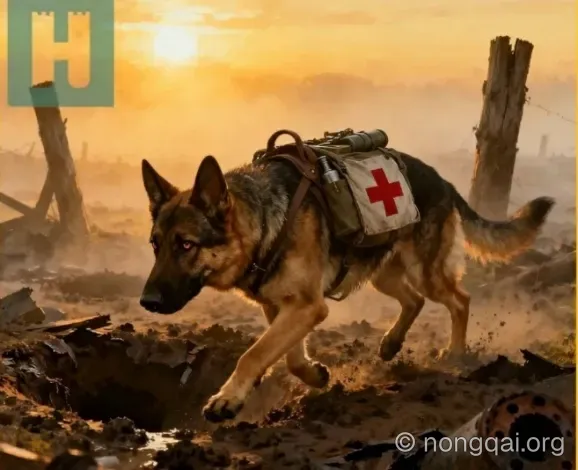
Strapped securely to his back was a weathered medical pack. When researchers carefully opened the preserved bag, they found medical supplies, including morphine ampoules bandages, field dressings and carefully folded military maps dated 1944, all linked to a mission during World War II that had never reached the soldiers desperately waiting for them. Every buckle remained fastened. Every pouch was still closed. It was as though the loyal medic had refused to abandon his mission, even after nature claimed him.
The markings suggested the dog had been trained as a medic messenger for the Red Cross, carrying emergency aid to wounded soldiers trapped during an ambush. Somewhere along the journey, the glacier swallowed the animal mid-mission. The supplies — and the escape plan they carried — never reached the soldiers who needed them.
Animal Souls #WWIIHistory #WarDogs #LoyalCompanion #NeverForgotten
##WWIIHistory#WarDosSouls#WWIIHistory #WarDogs#LoyalCompanion#NeverForgotten
Animal Souls #WWIIHistory #WarDogs #LoyalCompanion #NeverForgotteAnimal Souls #WWIIHistory #WarDogs #LoyalCompanion #NeverForgotten
Reflection
Their devotion stood out in a brutal setting. By putting themselves in danger again and again, these dogs helped save many lives and offered comfort when it was needed most. In a war defined by destruction, they represented care and compassion, and many soldiers remembered them as quiet guardians during their worst moments.
Looking back, mercy dogs highlight how animals have shaped history in more ways than we often notice.
They were not only companions, but working partners who made a real difference. Their story still points to courage, loyalty, and the strong bond between people and animals.
"Lest we forget" ...... "We will remember them"
The battlefield was still… the air thick with smoke… and silence louder than any scream. And through that silence came a Border Collie—strong, steady, wearing a satchel marked with a red cross. Inside: bandages, painkillers, water… and something deeper—compassion. He wasn’t there to fight. He wasn’t trained to harm. His mission? To heal. Through the shell-torn ground of No Man’s Land, he searched for the fallen— sometimes bringing life-saving aid, sometimes offering only presence and peace in those final, forgotten moments. He didn’t ask for recognition. He didn’t wait for praise. He simply stayed—beside the wounded, beside the dying ... Until help arrived… or didn’t. They say war is full of heroes in uniform. But what about the ones without ranks? What about those who brought silence, not gunfire? Comfort, not commands?
This Border Collie… he was their last light. Their final warmth. A silent soldier of mercy—walking into hell, not to fight, but to care.
Not all heroes wore boots ... some padded quietly across blood-soaked earth, carrying hope on four legs.
Courage, loyalty, and the strongest of bonds. Mercy Dogs.
https://en.wikipedia.org/wiki/Mercy_dog
This Article is dedicated to the organisation “Animals in War / Krygs Diere”
References:
https://en.wikipedia.org/wiki/Mercy_dog
https://historynet.com/mervy-fogs-meet-the-heroes-who-delivered-aid-and-comforted-the-dying-on-the-battlefields-of-world-war-i/
#WWII #WarDogs #RedCross #History #SwissAlps #UntoldStories #Loyalty #WarHistory
#AnimalSouls #WWIIHistory #WarDogs
#LoyalCompanion #NeverForgotten