
1938: SOUTH AFRICAN POLICE DOG MASTERS IN THE PALESTINE POLICE
By Brig HB Heymans
Introduction
The Palestine Police Force was a British colonial service established in Mandatory Palestine on 1 July 1920, under High Commissioner Sir Herbert Samuel. Composed of Jewish, Arab, and British officers, it operated during a period of intense political unrest, particularly during the Arab Revolt (1936–1939). South Africa’s involvement in this force—both politically and operationally—offers a compelling glimpse into imperial collaboration and the export of South African policing expertise.
General Jan Smuts and the Balfour Declaration
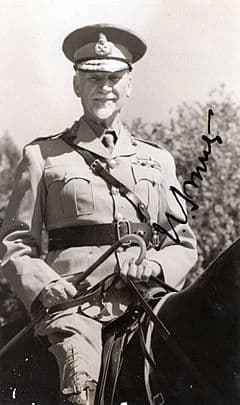
South Africa’s connection to Palestine predates the 1938 deployment of SAP officers. General Jan Christiaan Smuts, then a prominent statesman and military leader, played a pivotal behind-the-scenes role in shaping the Balfour Declaration of 1917. As a committed Christian Zionist and close confidant of British Prime Minister David Lloyd George and Foreign Secretary Arthur Balfour, Smuts actively encouraged the issuance of the Declaration, which promised the establishment of a Jewish homeland in Palestine.
Smuts’s influence stemmed from:
- His intellectual and theological alignment with Zionist ideals, believing the Jewish people deserved restoration to their ancestral land.
- A lifelong friendship with Chaim Weizmann, the Zionist leader, which began in 1917 and lasted until Smuts’s death.
- His strategic role in the British War Cabinet, where he advocated for Jewish self-determination as part of a broader vision of post-war justice.
Smuts later described the Balfour Declaration as “a great act of historic reparation” and “one of the most wonderful confirmations of the moral and spiritual principle in human affairs”.
South African Police Deployment in 1938
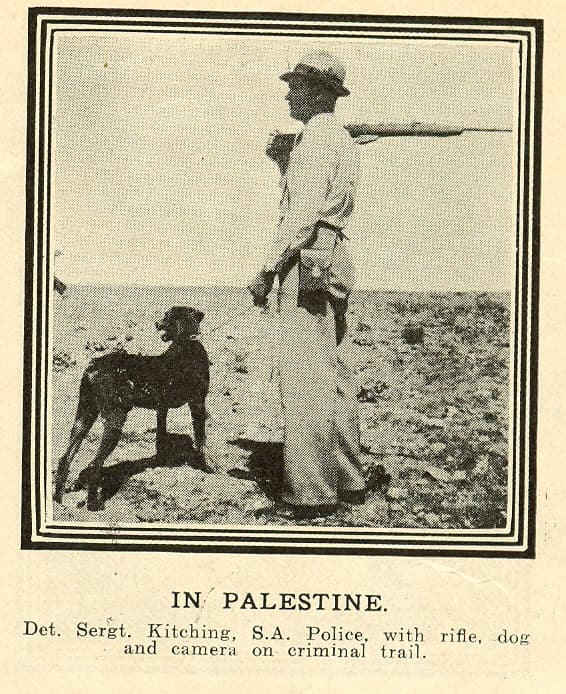
During the final years of British rule in Palestine, two seasoned South African detectives—Detective Sergeant MMS Kitching and Detective-Lance-Sergeant ZM Pretorius—were seconded to the Palestine Police. Trained as dog masters and official photographers, they brought specialized skills crucial to counterinsurgency operations during the Arab Revolt.


Their deployment reflected:
- South Africa’s technical contribution to imperial policing, especially in rural tracking and intelligence.
- The professional mobility of colonial officers, exemplified by Harry Rice, a former SAP Lance Corporal who rose to become Deputy Inspector General of the Palestine Police (CID).
- A growing institutional pride within SAP, as its officers were recognized internationally for their expertise.

Influence on SAP’s Corporate Memory
This episode, though a historical footnote, subtly shaped the corporate memory of the South African Police:
- It reinforced SAP’s self-image as a modern, exportable force.
- Introduced counterinsurgency and canine tracking doctrines that influenced domestic operations.
- Strengthened ties to imperial policing networks, embedding SAP within a transnational security ethos.
- Contributed to a mythos of competence and global relevance, documented in publications like The Nongqai.

Conclusion
The convergence of Smuts’s diplomatic legacy and SAP’s operational involvement in Palestine illustrates South Africa’s multifaceted role in imperial history. From high-level advocacy for Jewish statehood to boots-on-the-ground policing, South African influence in Mandatory Palestine was both ideological and practical—an enduring testament to the country’s complex entanglement with empire.
Bibliography
- Morris, Benny. Righteous Victims: A History of the Zionist-Arab Conflict, 1881–2001. New York: Vintage Books, 2001.
- National Archives (UK). Palestine Police Reports, 1936–1939. CO 733 series. Kew: The National Archives. https://discovery.nationalarchives.gov.uk/details/r/C18824381.
- National Archives of South Africa. SAP Personnel Archives. Pretoria: Government of South Africa. https://www.nationalarchives.gov.za/node/1278.
- Oxford University. Palestine Police Oral History Project. St Antony’s College. https://www.tandfonline.com/doi/pdf/10.1179/cbrl.2007.2.1.35.
- Palestine Government Printer. Palestine Blue Book, 1938. Jerusalem: Government Printer. Available at https://books.google.com/books/about/Blue_Book.html?id=XZohN7O-HiAC.
- Wikipedia contributors. “Palestine Police Force.” Wikipedia: The Free Encyclopedia. Last modified July 2025. https://en.wikipedia.org/wiki/Palestine_Police_Force.
- The Nongqai. South African Police Journal. February 1918; March, November, and December 1938 editions. Accessed via Nongqai Publications. https://www.nongqai.org/home-tuis/


Related Articles

1920 – 1948: The Palestine Police Force
August 17, 2025

South African Police in Kenya
July 16, 2025

Duty, Politics, and Retrospection: A Reflection on Security and Accountability Policing and Politics — A Thin Line
October 16, 2025
Book: Mapolisa – Some Reminiscences of a Rhodesian Policeman
June 13, 2025

The General’s Rank – Why Major General Is Lower Than Lieutenant General - Including Colonel-General, Captain-General, and South African Variants
September 17, 2025